



Behind most digital services are large data centres offering capacity for processing and storing data. Demand is growing rapidly, driven by digitalisation and artificial intelligence (AI). In particular, the breakthrough of generative AI tools such as ChatGPT has triggered a global race to build ever-larger data centres with increasingly powerful technology.
Norway is an attractive location for new establishments, with renewable and affordable energy, a cold climate and robust network infrastructure. Data centres generate economic activity, but are also heavy consumers of scarce resources such as electricity and grid capacity, land and labour.
According to The Norwegian Communications Authority’s register, as of September 2025 there are 84 data centres in Norway. They account for around two per cent of the country’s total electricity consumption, but this share is expected to increase considerably in the coming years. Thema Consulting estimates that electricity consumption from data centres could increase fivefold by 2030, reaching around six per cent of national consumption (9 TWh).
Data centres also account for 40 per cent of the capacity already reserved in the grid (3.2 GW) – projects that Statnett considers mature enough to connect – and nearly half of all capacity queuing for future connection (4.3 GW).
These developments suggest that data centres will become one of the largest drivers of increased energy consumption going forward, with consequences for local power balances and the room for manoeuvre available to other industries.
Policy Choices for Norway
The growth of data centres in Norway raises key questions:
- What knock-on effects might data centres have for industry development and society?
- What role can and should they play in the energy system?
- How do we weigh competing considerations in the face of limited resources?
The societal impact will depend on where, how, how many, and on what terms new facilities are established.
The Storting passed legislation last year to gain a better overview of the industry, but data centre policy is still being developed. At the same time, technology, markets and regulatory frameworks are all changing rapidly. How Norway chooses to manage these developments will have implications for industrial, energy and climate policy — as well as for societal concerns such as security and national sovereignty, the environment and local acceptance.
About the Project
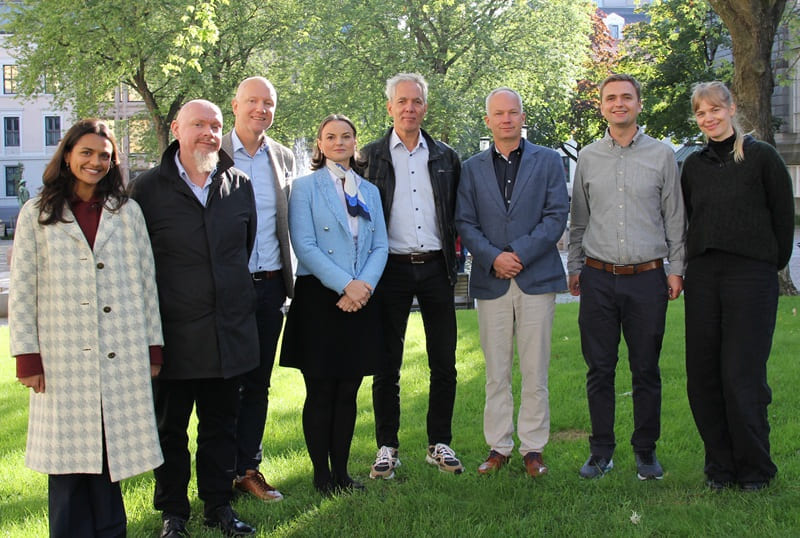
The project “Data Centres in Norway” is to deliver a report with analyses and policy recommendations by summer 2026. To ensure broad professional grounding, the Norwegian Board of Technology has established an expert group that meets regularly throughout the project period to provide input and assessments. The group held its first meeting on 26 September 2025.
Members of the Expert Group
- Sverre Gotaas, Director of Herøya Industripark AS and Chair of the Norwegian Board of Technology
- Catherine Banet, Professor, Department of Energy and Resources Law, University of Oslo
- Magnus Korpås, Professor, Department of Electric Power Engineering, NTNU
- Petter Røkke, Research Director for Thermal Energy, SINTEF Energy
- Stein Inge Knarbakk, Head of Department, Sigma2
- Øivind Anti Nilsen, Professor, Department of Economics, NHH